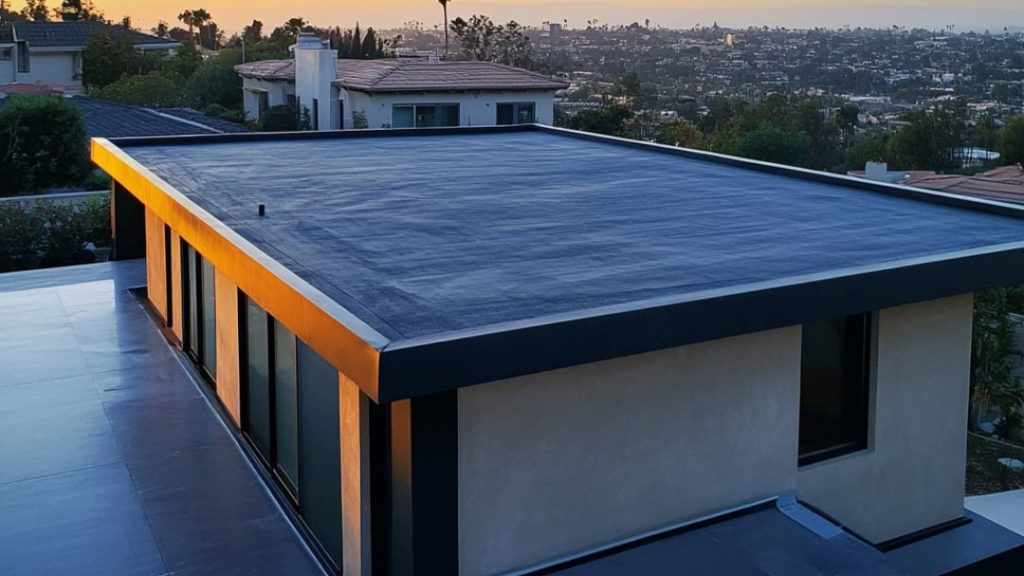
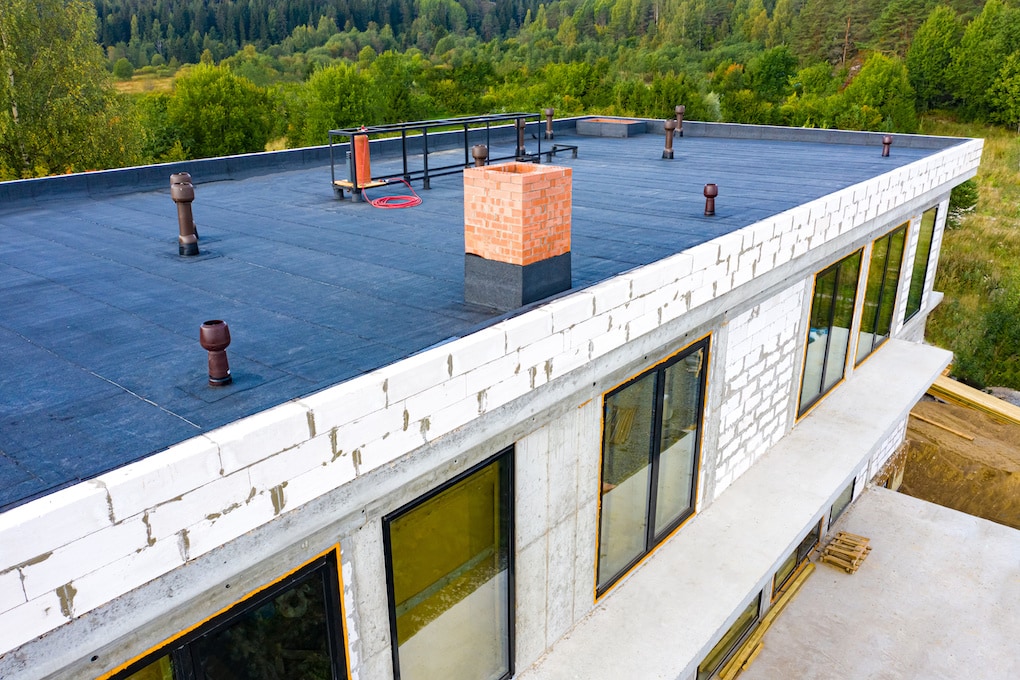
Flat roofs are common in modern architecture and commercial buildings. While they appear level, they always have a slight pitch (at least 1:40) to ensure water drains properly.
Pros and Cons
Cost-effective: Uses fewer materials than pitched roofs.
Extra Space: Perfect for roof gardens, terraces, or HVAC units.
Accessibility: Easier and safer to inspect or install solar panels.
Cons:
Drainage: Water can pool if the design or maintenance is poor.
Maintenance: Requires more frequent checks than sloped roofs.
Lifespan: Generally shorter (15–30 years) compared to tiles or slate.
Common Materials
EPDM (Rubber): Durable, lightweight, and very resistant to weathering.
TPO / PVC: White reflective membranes that help reduce cooling costs.
Built-Up Roof (BUR): Traditional layers of gravel and hot tar.
Modified Bitumen: Asphalt layers reinforced with fabric or fiberglass.
GRP (Fiberglass): A seamless, liquid-applied glass-reinforced plastic.