
PREPARATION AND INSTALLATION OF WATERPROOFING
The selection and application of waterproofing are critical to the durability of any building.
Types of waterproofing
According to the composition and method of application, they are divided into:
Types of waterproofing
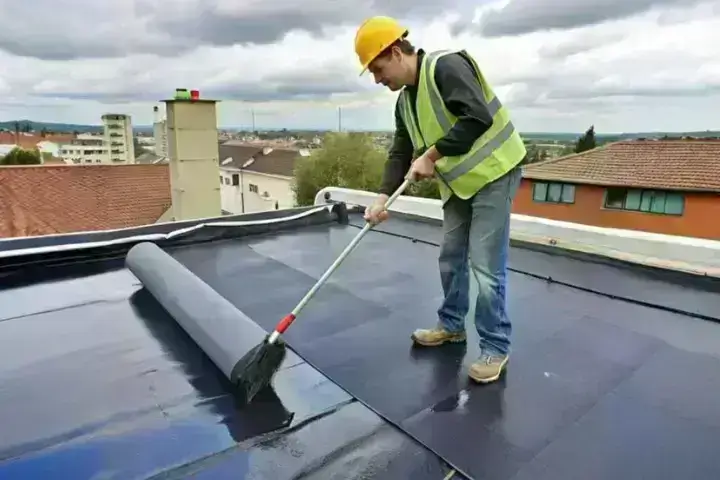
Bitumen membranes: Most common for flat roofs and foundations. They can be gas-fired or self-adhesive.
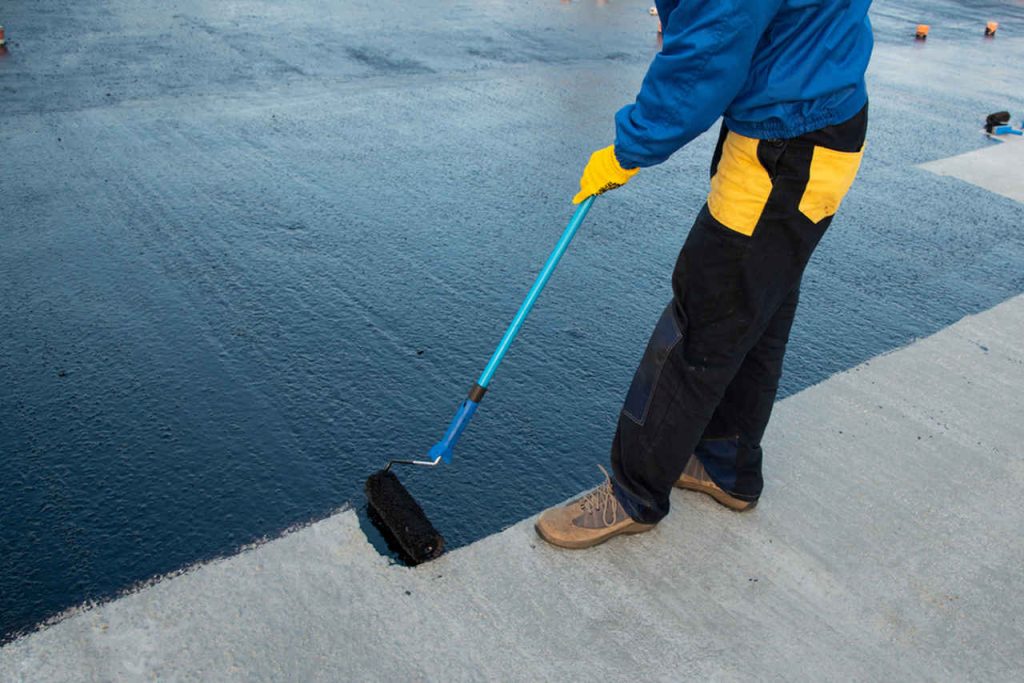
Liquid (smeared) waterproofing: Includes liquid rubber, polyurethane and acrylic mastics. Ideal for complex shapes and terraces, as it creates a seamless membrane.
Synthetic membranes (PVC, TPO, EPDM): Extremely resistant to UV rays and mechanical damage, often used in large industrial sites.
Cementitious waterproofing: Hard or elastic slurries, preferred for bathrooms, pools and tanks.
Hybrid systems: Combine the advantages of different materials for maximum protection.
Laying stages
The right technology guarantees efficiency:
Substrate preparation: The surface must be clean, dry, sound and without sharp edges. All cracks are filled in advance.
Priming: A suitable waterproofing primer is applied, which improves adhesion between the substrate and the insulation.
Detail processing: Insulation of critical points such as funnels, siphons, corners (with the application of waterproofing tape) and chimneys.
Application of the base layer: Application of the membrane or the smeared layer according to the manufacturer’s instructions.
Protection (if necessary): A drainage membrane is applied to foundations, and a UV protection coating can be added to roofs.
For professional implementation or consultation, you can contact specialized companies such as Izomax for liquid solutions or Hydroengineering for complete systems.
Note
What type of object are you planning to insulate – roof, foundation or wet room?